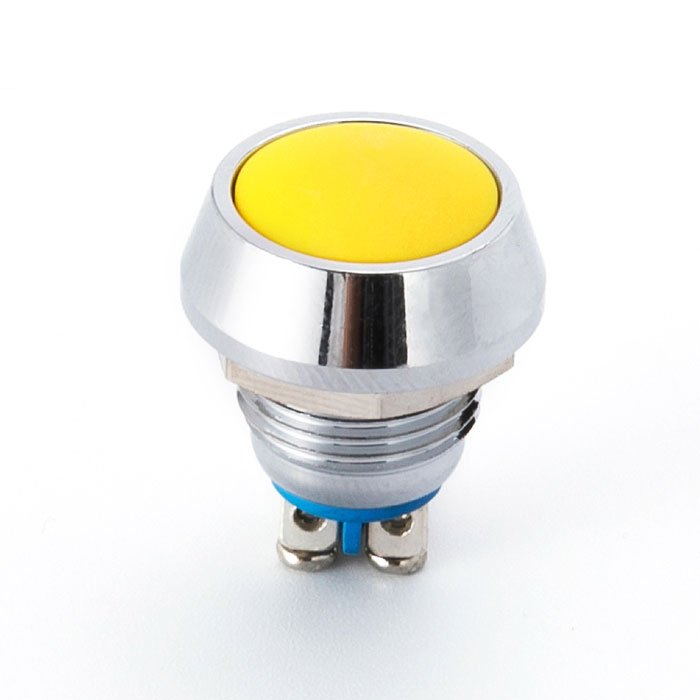
(1) Protective button(push button switch): a button with protective shell, which can prevent the internal button parts from mechanical damage or people from touching the live part. Its code is h.
(2) Dynamic off button(push button switch): under normal conditions, the switch contact is a button for on.
(3) Dynamic closing button(push button switch): under normal conditions, the switch contact is a button that is disconnected.
(4) Dynamic on-off button(push button switch): under normal conditions, the switch contact has both on and off buttons.
(5) Button with light: the button is equipped with signal light, which is not only used to issue operation command, but also used as signal indication, and its code is d.
(6) Action click button: that is, click the button with the mouse.
(7) Explosion proof button: a button that can be used in places containing explosive gas and dust without causing explosion. Its code is B.
(8) Anti corrosion button: it can prevent the invasion of chemical corrosive gas, and its code is f.
A Latching Push Button Switch is designed to maintain its switching state after being pressed. Unlike a momentary push button, which returns to its original position as soon as the operator releases it, a latching switch remains active until it is operated again or manually released. This makes latching push buttons useful in industrial control […]
An Emergency Stop Push Button is a critical control component used on industrial machinery, automation systems, production lines, and control panels. Its purpose is simple: allow an operator to quickly initiate a stop command when an abnormal or potentially dangerous condition occurs. Although most emergency stop buttons use a familiar mushroom head, not all models […]
A Push Button Switch is one of the most common control components used in industrial machinery, electrical panels, automation systems, and control equipment. Although the device appears simple, choosing the right push button requires more than selecting a color or mounting size. Engineers need to consider the operating method, contact configuration, rated voltage and current, […]