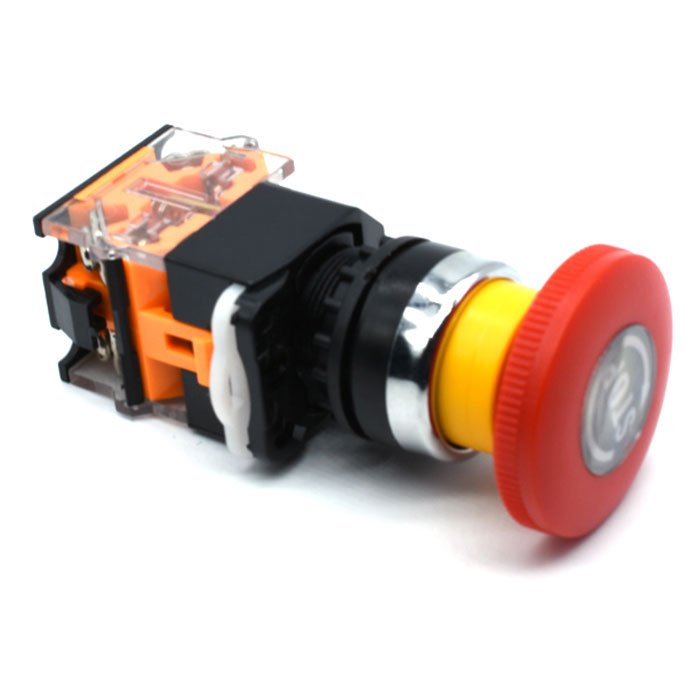
(1) (push button switch)Always check the button to remove dirt. Due to the small contact spacing of the button, after years of use or poor sealing, dust or oil emulsion will flow in, resulting in reduced insulation and even short circuit accidents. In this case, insulation and cleaning treatment must be carried out, and corresponding sealing measures must be taken.
(2) (push button switch)When the button is used in high-temperature occasions, it is easy to deform and age the plastic, resulting in the loosening of the button and the collision and short circuit between the connecting screws. A fastening ring can be added during installation according to the situation, or an insulating plastic pipe can be added at the wiring screw to prevent loosening.
(3)(push button switch) The button with indicator light is easy to deform the plastic lampshade for a long time, which makes it difficult to replace the bulb. Therefore, it should not be used in places with long power on time; If you want to use it, you can appropriately reduce the bulb voltage and prolong its service life.
(4) (push button switch)If poor contact is found, the cause shall be found out: if the contact surface is damaged, it can be trimmed with a fine file; If there is dust or soot on the contact surface, wipe it with a clean cotton cloth dipped in solvent; If the contact spring fails, it shall be replaced; If the contact is seriously burned, the product shall be replaced.
A Latching Push Button Switch is designed to maintain its switching state after being pressed. Unlike a momentary push button, which returns to its original position as soon as the operator releases it, a latching switch remains active until it is operated again or manually released. This makes latching push buttons useful in industrial control […]
An Emergency Stop Push Button is a critical control component used on industrial machinery, automation systems, production lines, and control panels. Its purpose is simple: allow an operator to quickly initiate a stop command when an abnormal or potentially dangerous condition occurs. Although most emergency stop buttons use a familiar mushroom head, not all models […]
A Push Button Switch is one of the most common control components used in industrial machinery, electrical panels, automation systems, and control equipment. Although the device appears simple, choosing the right push button requires more than selecting a color or mounting size. Engineers need to consider the operating method, contact configuration, rated voltage and current, […]