Proximity switch sensor function

Proximity switch sensor function

Working Principle of Proximity Switch Sensors

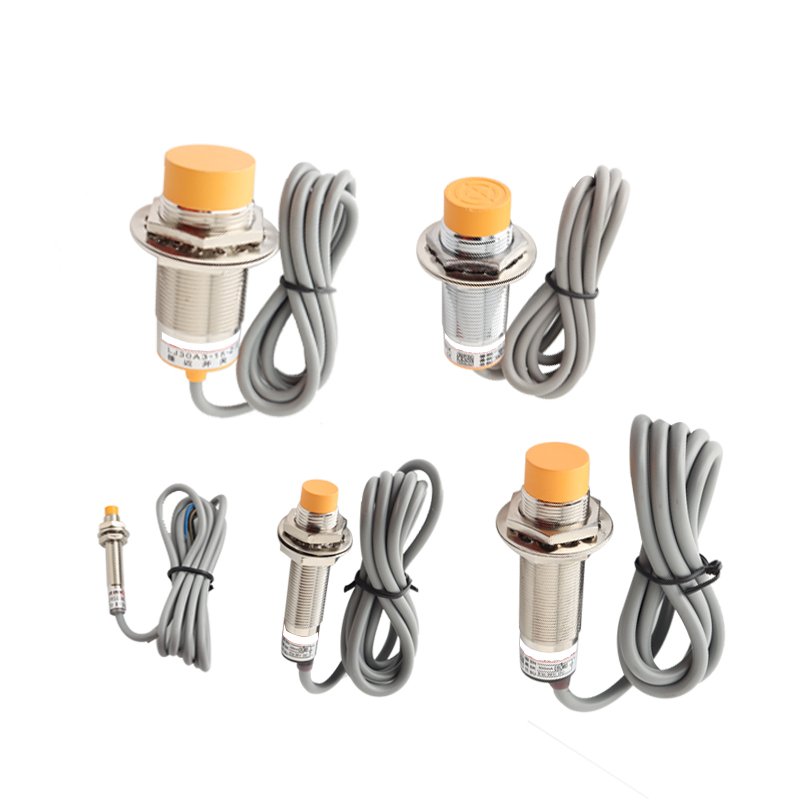
Proximity switch sensors, as efficient non-contact detection devices, operate based on sensing specific properties of objects.  These sensors can be broadly categorized into several types: inductive, capacitive, and magnetic, each designed for different environments and object properties.

1.Inductive Proximity Switch Sensors

  • These sensors are primarily used for detecting metallic objects.
  • They work by sensing changes in the electromagnetic field caused by a metal object’s presence near their internal coil.
  • The disturbance in the electromagnetic field alters the inductance in the sensor, triggering the switch action.

2.Capacitive Proximity Switch Sensors

  • Capacitive sensors are suitable for almost all types of materials, including plastics, glass, and wood.
  • They detect objects by sensing changes in the electric field between the capacitor plates.
  • When an object approaches the sensor, the capacitance changes, and this alteration is detected and converted into an electrical signal.

The unique working mechanisms of these different types of proximity switch sensors allow them to efficiently detect objects of various materials in diverse environments. This versatility and adaptability are key reasons for their widespread popularity in numerous applications.

Main Features of Proximity Switch Sensors

Proximity switch sensors are favored in many industrial and commercial applications due to their following characteristics:

1.High Precision and Reliability

Proximity switch sensors offer high accuracy, detecting even minute changes in distance.They respond quickly, instantly detecting the approach of objects.Their design enables stable operation across a variety of environments, including high temperatures, pressures, or corrosive substances.

2.durability

As non-contact sensors, they do not wear out due to frequent contact with objects, significantly extending their lifespan.They are usually made of robust materials capable of withstanding harsh environments.

3.Easy to install and maintain

These sensors are simple to install, requiring no complex setup or adjustments.Due to their simple construction, proximity switch sensors generally require little maintenance.

4.cost-effectiveness

Despite offering high precision and reliability, the cost of proximity switch sensors is relatively low.Their durability means lower maintenance and replacement costs over the long term.

5.Strong adaptability

  • Proximity switch sensors can be used with a variety of materials and in different environments, from metallic to non-metallic, and from dry to moist conditions.

These features make proximity switch sensors an essential part of many industrial and commercial applications. They play a significant role in improving production efficiency, ensuring operational safety, and reducing operational costs.

6

Related Posts

Common Metal Push Button Switch types and application fields(1)

Common Metal Push Button Switch types and application fields(1)

Common types of Metal Push Button Switches include self-locking switches, self-resetting switches, knob gear switches, lever gear switches, locking switches, etc. Because the Metal Push Button Switch is small in size, easy to install, made of metal, and can be used with voltages ranging from 9-220v, and the metallic appearance can even be customized with personalized icons, making the […]

What is the emergency stop push button switch?

What is the emergency stop push button switch?

An emergency stop push button switch, often referred to simply as an “emergency stop button” or “E-stop,” is a safety device commonly found in machinery, industrial equipment, and various automated systems. Its primary function is to immediately halt the operation of a machine or process in case of an emergency to prevent injury to personnel, damage […]

What are the characteristics of sine wave inverters?

What are the characteristics of sine wave inverters?

Sine wave inverter is a kind of inverter, it is the DC electric energy (power battery, battery) into alternating current (generally 220V, 50Hz sine wave) power electronic device. Inverter and ACDC converter are the opposite process. ACDC converter or power adapter will be 220V AC rectifier into direct current to use, and the inverter has […]