
In the proximity switch, there is a component that has the ability to “perceive” the object approaching it, that is, the displacement sensor. It can use the sensitivity of the displacement sensor to the approaching object to achieve the purpose of controlling the switch on or off. The object moves from the switch to the switch and the switch. The distance sensed by the displacement sensor after approaching a certain distance is called the detection distance. Sometimes the detected objects approach the switch at a certain time interval and then leave one after another, which is repeated continuously, and the response ability of different proximity switches to the detected object is also different, which is called the response frequency.
How does a proximity switch work?
Published:
Author: Wenzhou Sunto
Related Posts
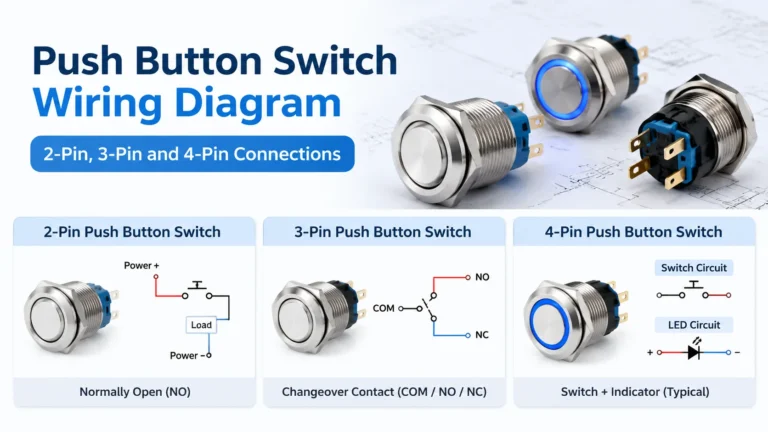
A Push Button Switch Wiring Diagram helps engineers, electricians, and equipment manufacturers understand how to connect a push button to a control circuit. However, the correct wiring method depends on the switch’s terminal arrangement, contact configuration, and whether the product includes an indicator light. A 2-pin push button may provide a simple switching function, while […]
Read More
Wenzhou Sunto
Waterproof Push Button Switch: IP Ratings, Types and How to Choose the Right One
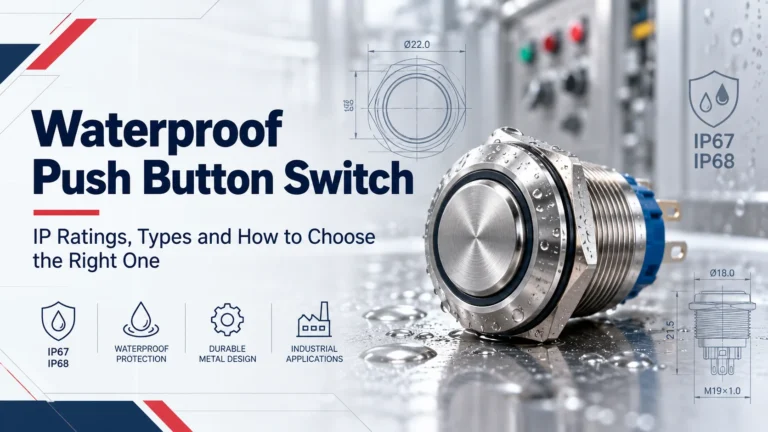
A Waterproof Push Button Switch is designed for electrical control applications where moisture, dust, or water exposure may affect normal switch operation. It is commonly used in industrial machinery, outdoor equipment, vehicle controls, marine applications, and electrical control panels. However, not every waterproof push button provides the same level of protection. The appropriate choice depends […]
Read More
Wenzhou Sunto
Latching Push Button Switch: How It Works and Momentary vs Latching Differences
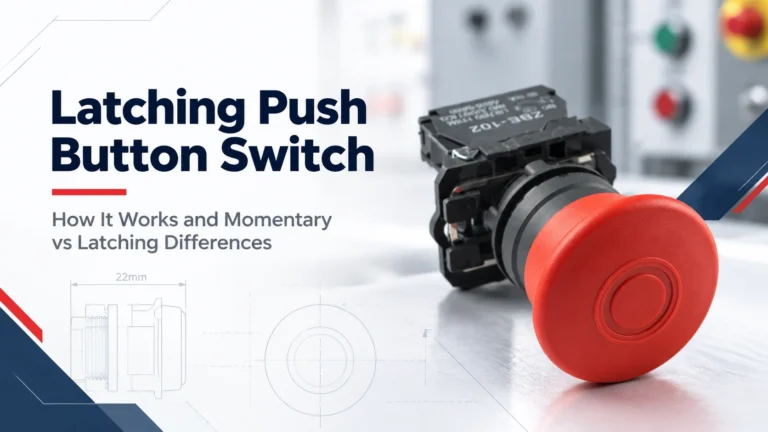
A Latching Push Button Switch is designed to maintain its switching state after being pressed. Unlike a momentary push button, which returns to its original position as soon as the operator releases it, a latching switch remains active until it is operated again or manually released. This makes latching push buttons useful in industrial control […]
Read More