
Working principle of the push button switch
The operating force of the key switch is related to the state of the reed. The starting force is directly proportional to the compression distance of the reed. When the reed is compressed to 5% – 70%, the operating force suddenly decreases, accompanied by a “ticking” sound. There are generally two structures of turtle rubber switch. The operating force curve varies greatly with the geometry of the rubber block.
Relative humidity: < 95%
Rated voltage: 12V
Rated current: 50mA
Temperature: – 25 ~ 70 ℃

Usage ofthe push button switch
Key switches are mainly used for color TV sets, black-and-white TV sets, audio equipment, video recorders, video cameras, computers, game consoles, fax machines, walkie talkies, batons, machine tool control devices, copying, printers, electronic instruments, meters and other household appliances.

16
Previous Post

Different kinds of push button switches

Next Post

The introduction of the push button switch

Related Posts

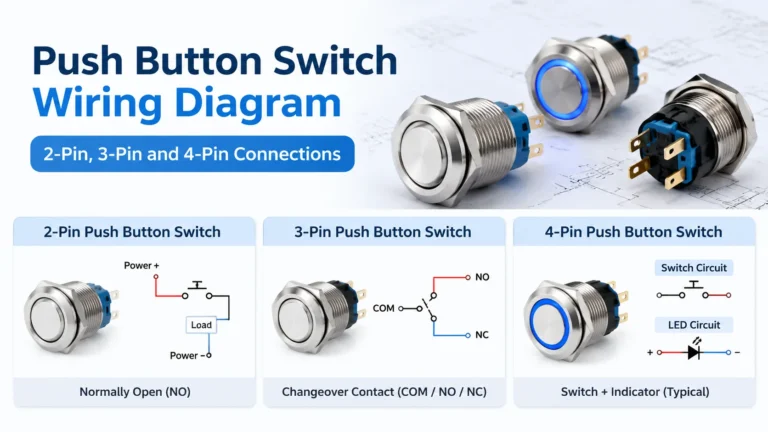
Push Button Switch Wiring Diagram: 2-Pin, 3-Pin and 4-Pin Connections

Push Button Switch Wiring Diagram: 2-Pin, 3-Pin and 4-Pin Connections

A Push Button Switch Wiring Diagram helps engineers, electricians, and equipment manufacturers understand how to connect a push button to a control circuit. However, the correct wiring method depends on the switch’s terminal arrangement, contact configuration, and whether the product includes an indicator light. A 2-pin push button may provide a simple switching function, while […]
Read More
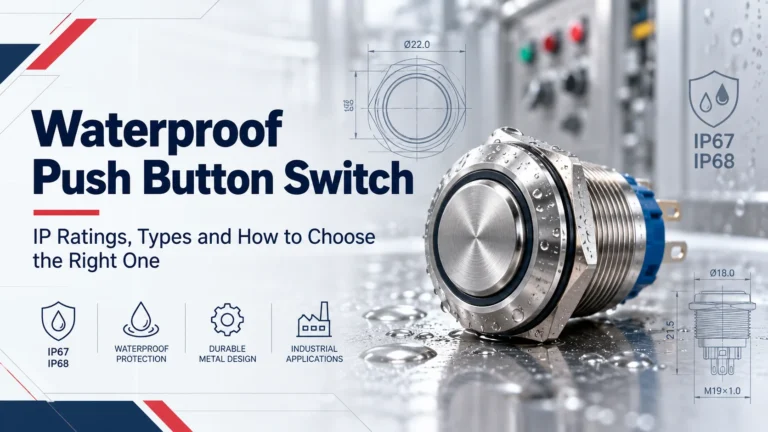
Waterproof Push Button Switch: IP Ratings, Types and How to Choose the Right One

Waterproof Push Button Switch: IP Ratings, Types and How to Choose the Right One

A Waterproof Push Button Switch is designed for electrical control applications where moisture, dust, or water exposure may affect normal switch operation. It is commonly used in industrial machinery, outdoor equipment, vehicle controls, marine applications, and electrical control panels. However, not every waterproof push button provides the same level of protection. The appropriate choice depends […]
Read More
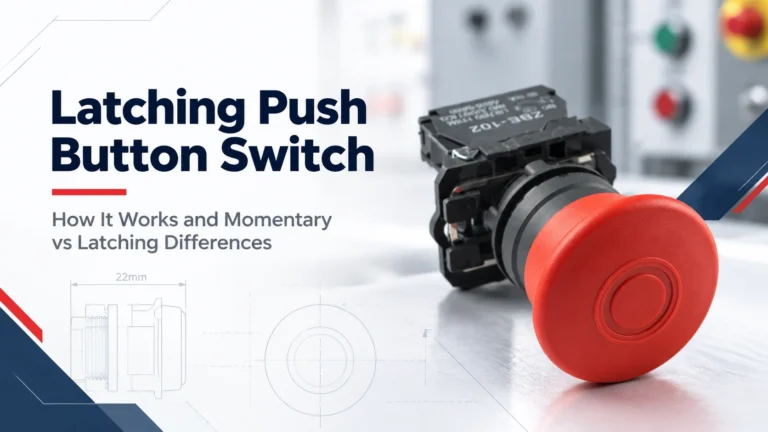
Latching Push Button Switch: How It Works and Momentary vs Latching Differences

Latching Push Button Switch: How It Works and Momentary vs Latching Differences

A Latching Push Button Switch is designed to maintain its switching state after being pressed. Unlike a momentary push button, which returns to its original position as soon as the operator releases it, a latching switch remains active until it is operated again or manually released. This makes latching push buttons useful in industrial control […]
Read More
+86-15869659197 Phone nite@cnwuce.com E-mail