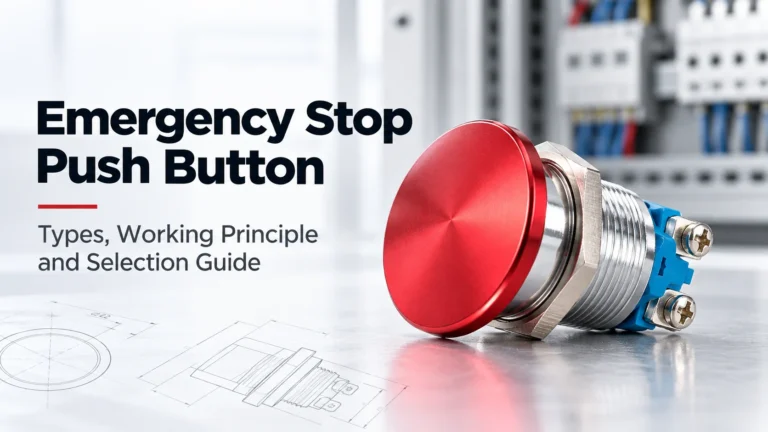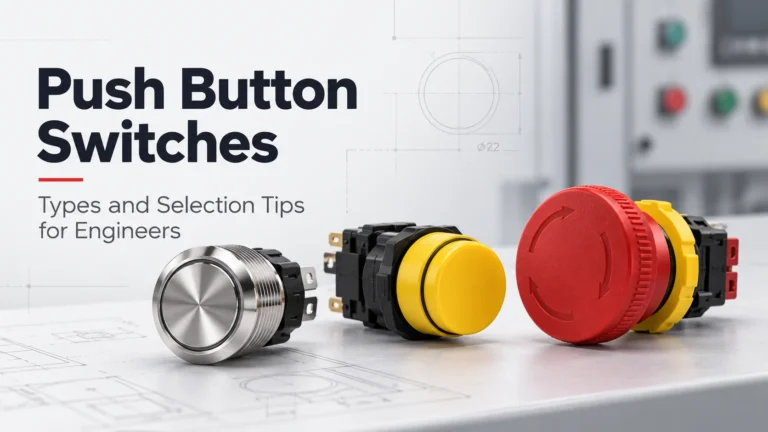
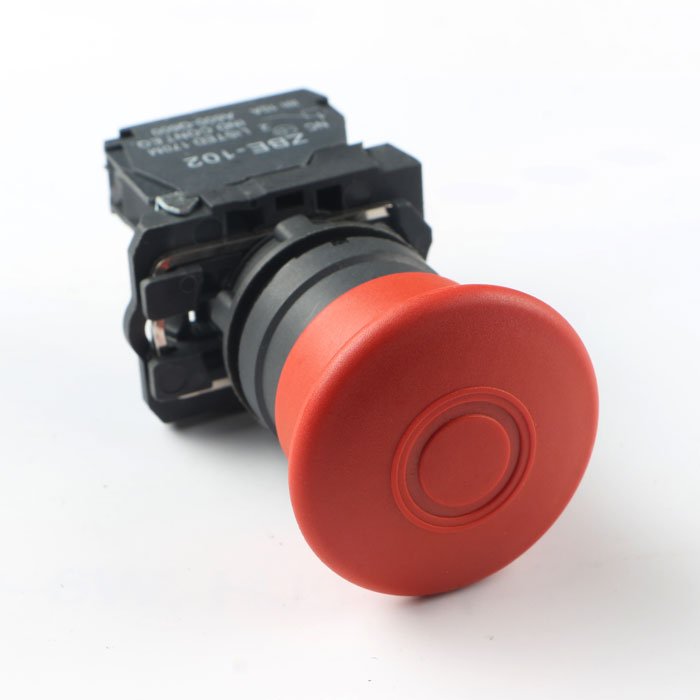
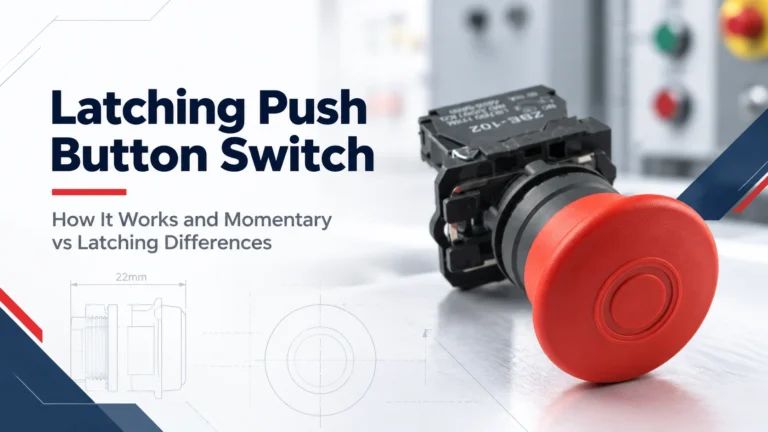
The structural characteristics of the button switch The structure of the button switch: It is composed of a button cap, a return spring, a fixed contact, a movable contact, a shell and a pillar connecting rod. Normally open contact (moving contact): refers to the contact in the original state (the electrical appliance is not subjected to external force or the coil is not energized), the fixed contact and the movable contact are in a separate state. Normally closed contact (moving break contact): refers to the contact in the original state (the electrical appliance is not subjected to external force or the coil is not energized), the fixed contact and the movable contact are in a closed state. Normally open (moving on) button switch, when not pressed, the contact is open, when pressed, the contact is closed and connected; when released, the button switch is reset and opened under the action of the return spring. In the control circuit, the normally open button is often used to start the motor, also known as the start button. The normally closed (moving off) button switch is the opposite of the normally open button switch. When it is not pressed, the contact is closed, and the contact is opened when pressed; when the hand is released, the button switch is reset and closed under the action of the reset spring . The normally closed button is often used to control the parking of the motor and is also called the parking button. Compound button switch: a button switch that combines a normally open and a normally closed button switch, that is, it has a normally closed contact and a normally open contact. When not pressed, the normally closed contact is closed, and the normally open contact is open. When the button is pressed, the normally closed contact is opened first, and the normally open contact is closed; when released, the button switch will first open the normally open contact and then close the normally closed contact under the action of the return spring , The compound button is used in the interlock control circuit.
How to adjust the high and low speed control of the industrial remote control? There are usually two methods for high and low speed control ofindustrial remote controls. One is to adjust the high and low speed through the speed adjustment knob on the remote control. Generally, the knob will be labeled as “SPEED” or “S/R” […]
Inductive proximity switch sensor is a low cost method for non-contact detection of metal objects. When metal objects move towards or out of the proximity switch, the signal will automatically change, so as to achieve the purpose of detection. Its composition is mainly composed of three parts: amplifier output circuit, switching circuit, oscillator.An oscillator, one of […]
Industrial remote control requires precision, sensitivity, signal continuity, real-time, interference resistance, remote control distance, waterproof and dustproof, high and low temperature resistance, acid and alkali resistance and other technical parameters, are higher than the civilian remote control, industrial remote control can adapt to a variety of harsh environment; These are the reasons why the civilian remote […]
We use cookies to enhance your browsing experience, serve personalised ads or content, and analyse our traffic. By clicking "Accept All", you consent to our use of cookies.