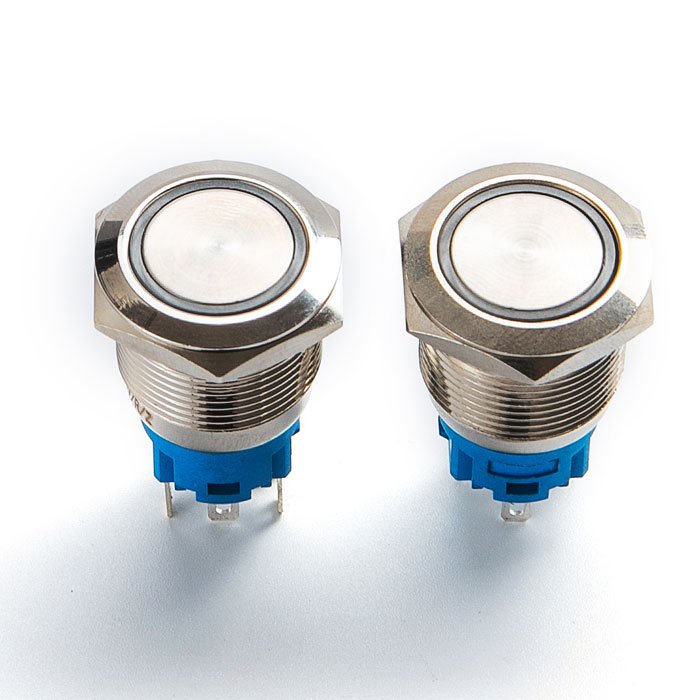
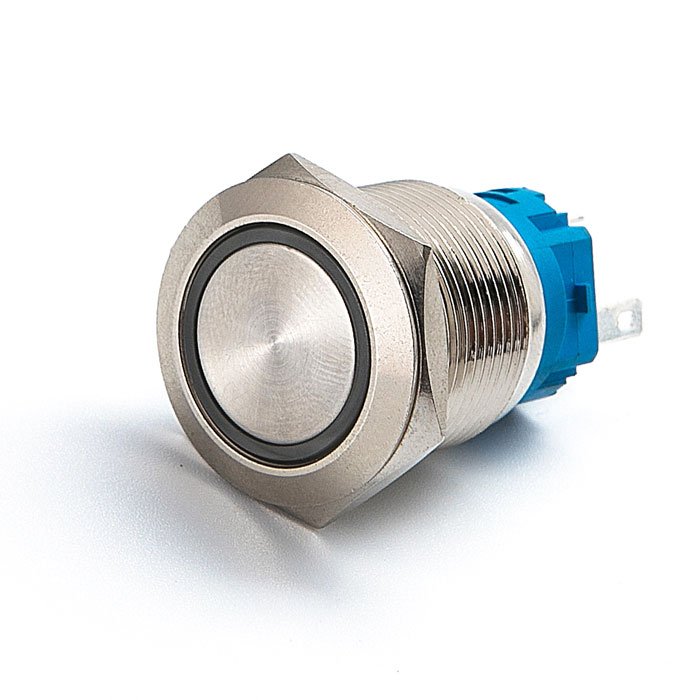
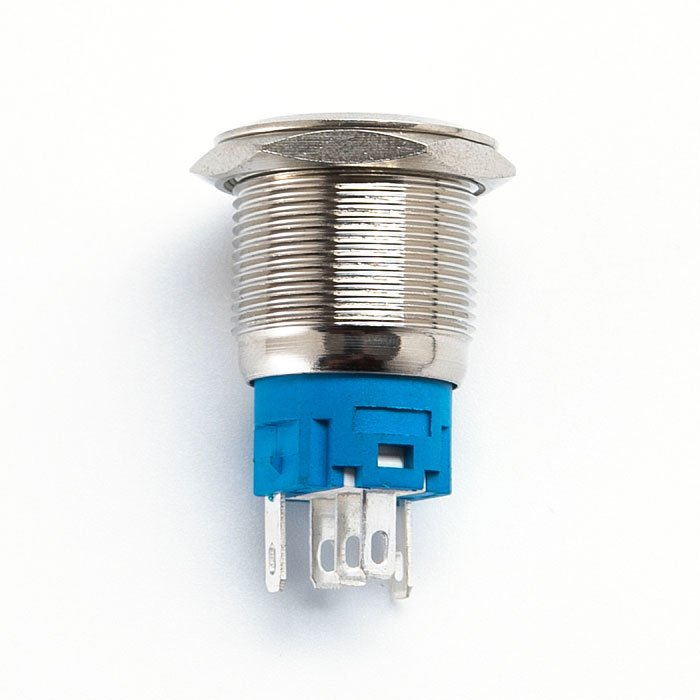
Push buttons come in various types and configurations, but broadly speaking, they can be categorized into two main types based on their electrical contacts and functions:
Normally Open (NO) Push Button:
In a normally open push button, the circuit is open (no electrical continuity) when the button is at rest or not pressed.
When the button is pressed, it closes the circuit, allowing current to flow through the contacts.
It is often used to start a process or activate a device when the button is pressed.
Normally Closed (NC) Push Button:
In a normally closed push button, the circuit is closed (electrically connected) when the button is at rest or not pressed.
When the button is pressed, it opens the circuit, interrupting the flow of current through the contacts.
It is commonly used in applications where a circuit needs to be interrupted or a process needs to be stopped when the button is pressed.
These two types of push buttons are fundamental components in control systems and are often used in combination to create specific functionalities. For example, a start button might be a normally open type, and a stop button might be a normally closed type to control the operation of a machine or a system.
It’s important to note that push buttons can come in various shapes, sizes, and designs, and they can be momentary (returns to its original state when released) or latching (stays in the pressed or released state until manually reset). The specific type of push button used depends on the requirements of the electrical circuit and the intended application.
A Latching Push Button Switch is designed to maintain its switching state after being pressed. Unlike a momentary push button, which returns to its original position as soon as the operator releases it, a latching switch remains active until it is operated again or manually released. This makes latching push buttons useful in industrial control […]
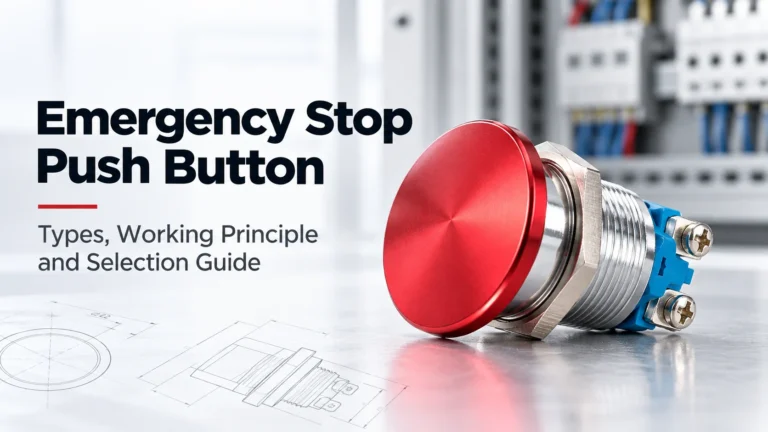
An Emergency Stop Push Button is a critical control component used on industrial machinery, automation systems, production lines, and control panels. Its purpose is simple: allow an operator to quickly initiate a stop command when an abnormal or potentially dangerous condition occurs. Although most emergency stop buttons use a familiar mushroom head, not all models […]
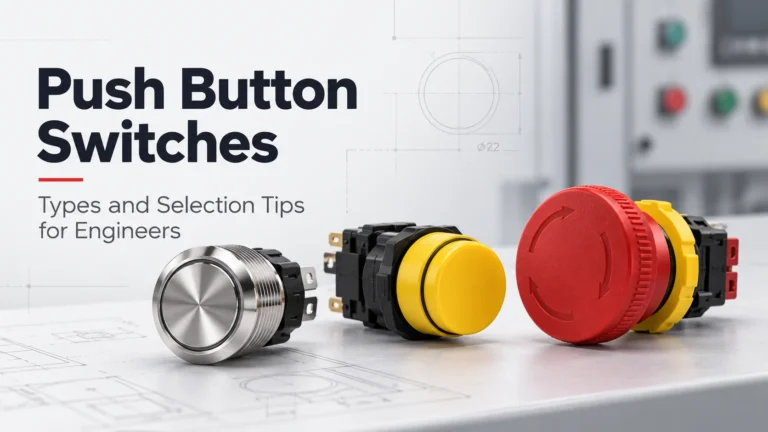
A Push Button Switch is one of the most common control components used in industrial machinery, electrical panels, automation systems, and control equipment. Although the device appears simple, choosing the right push button requires more than selecting a color or mounting size. Engineers need to consider the operating method, contact configuration, rated voltage and current, […]