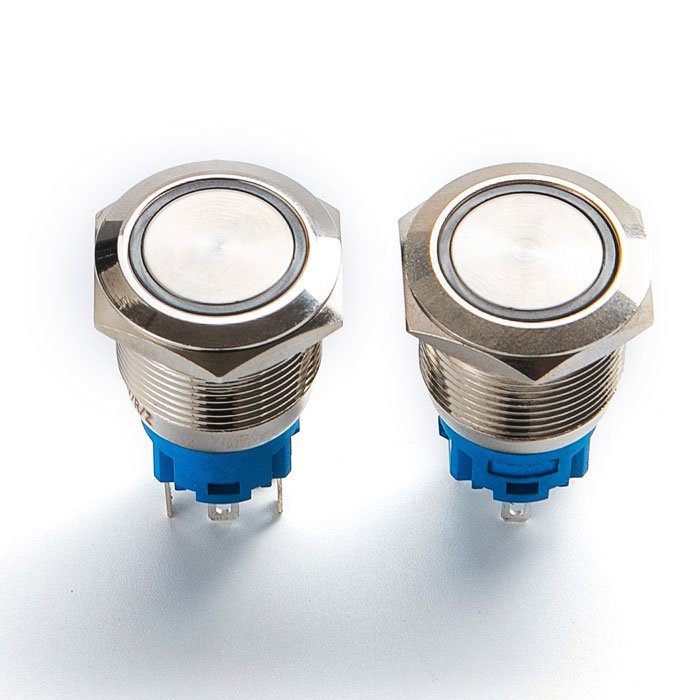
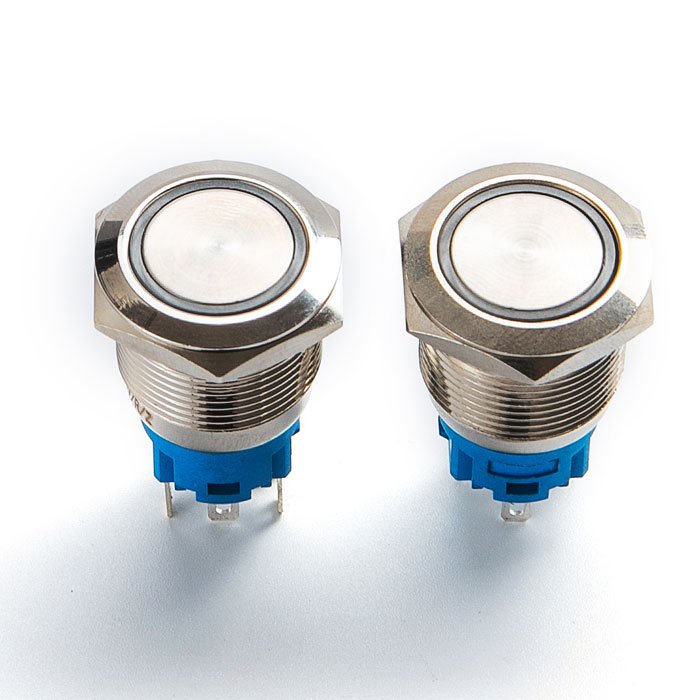
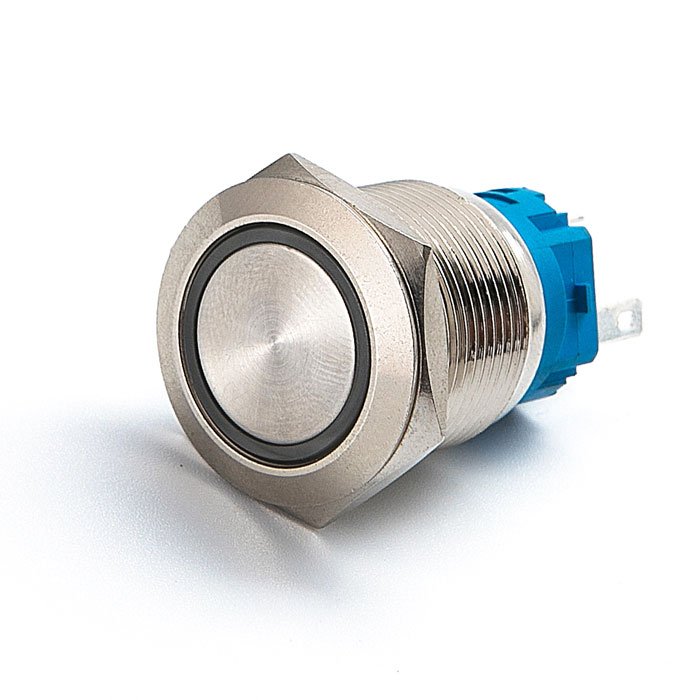
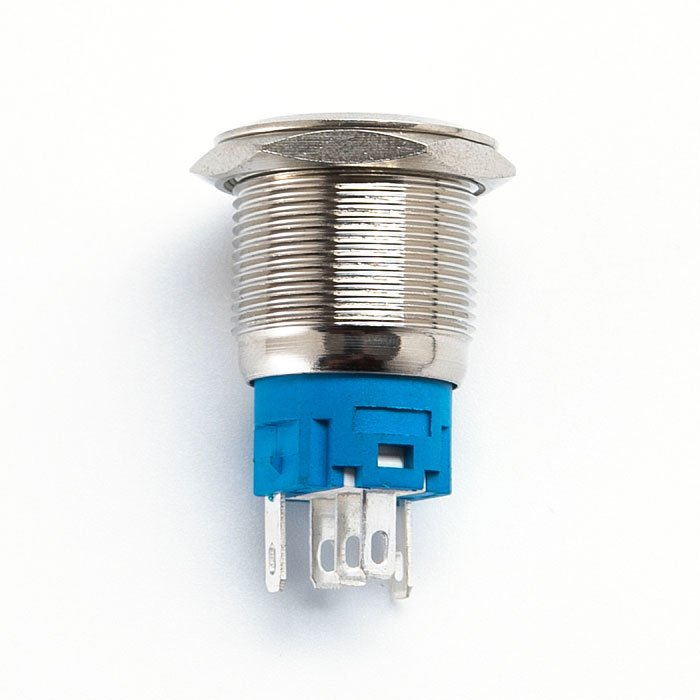
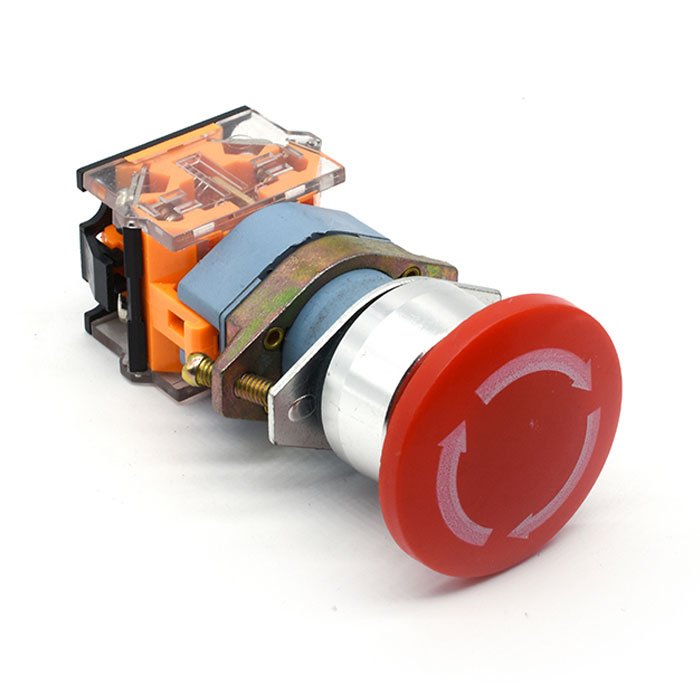
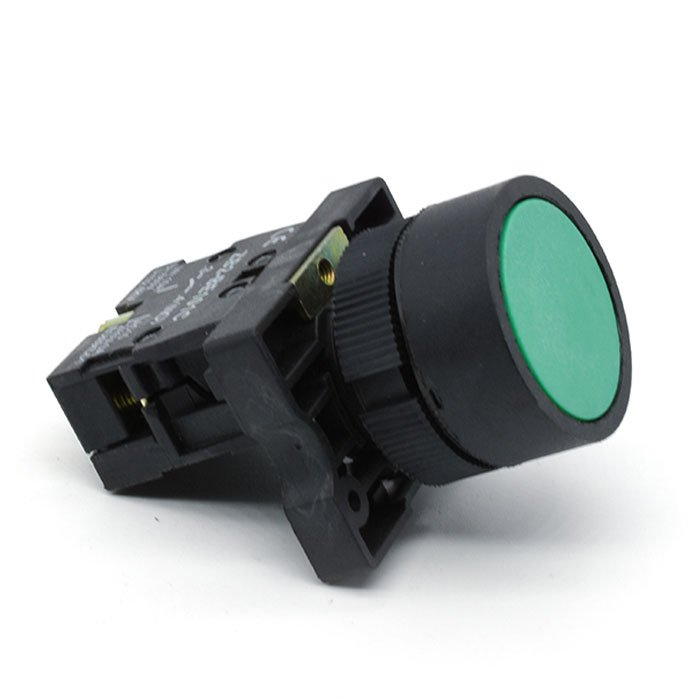
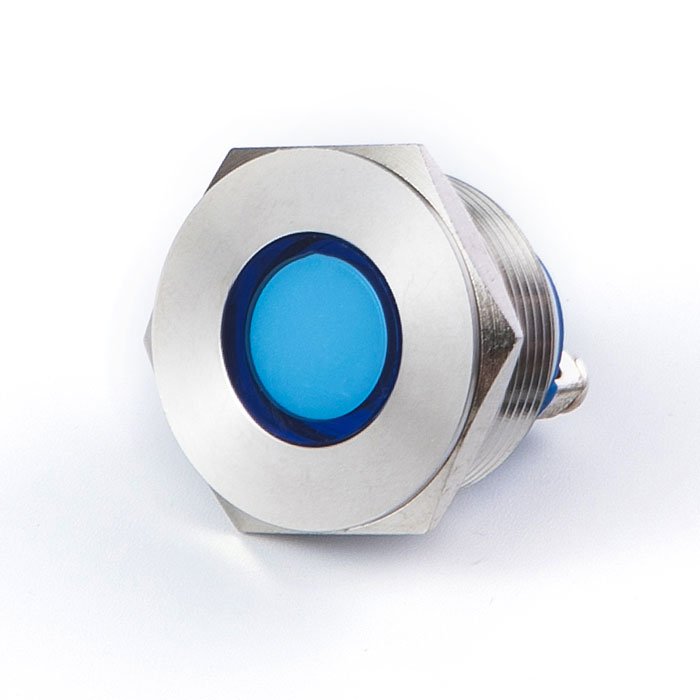
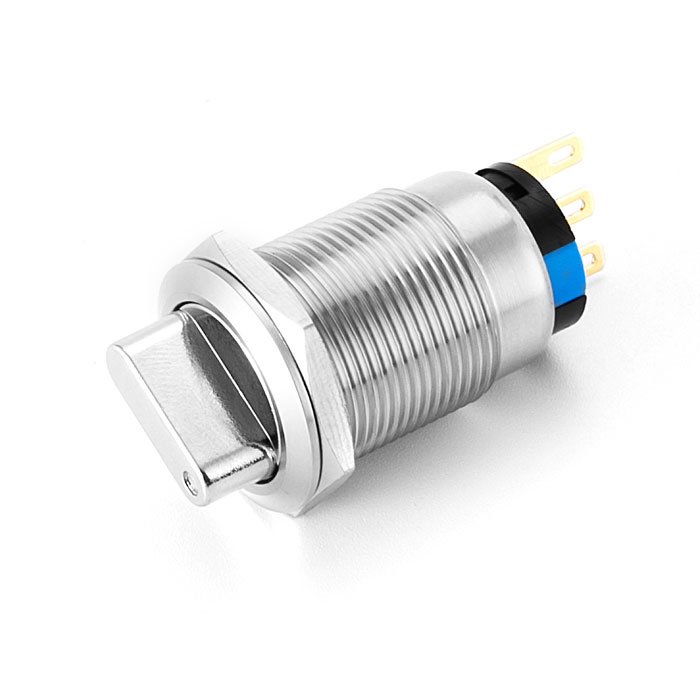
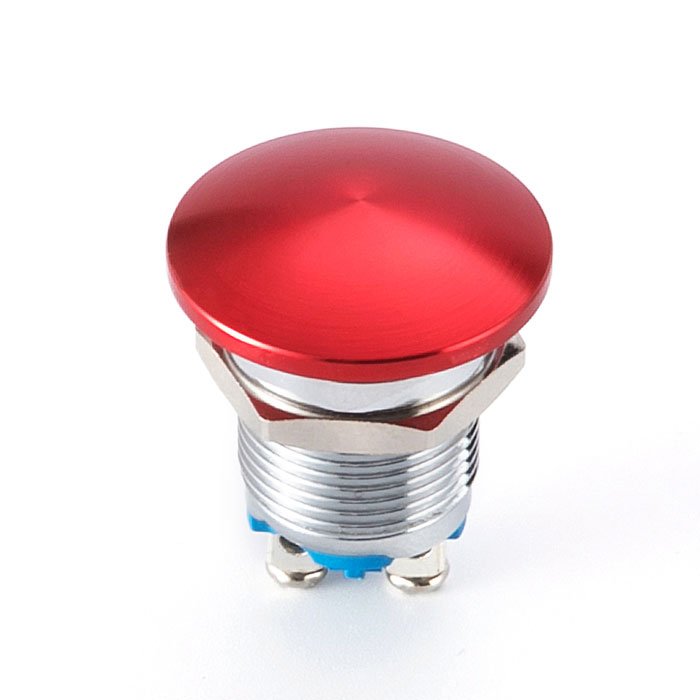
Push buttons come in various types and configurations, but broadly speaking, they can be categorized into two main types based on their electrical contacts and functions:
Normally Open (NO) Push Button:
In a normally open push button, the circuit is open (no electrical continuity) when the button is at rest or not pressed.
When the button is pressed, it closes the circuit, allowing current to flow through the contacts.
It is often used to start a process or activate a device when the button is pressed.
Normally Closed (NC) Push Button:
In a normally closed push button, the circuit is closed (electrically connected) when the button is at rest or not pressed.
When the button is pressed, it opens the circuit, interrupting the flow of current through the contacts.
It is commonly used in applications where a circuit needs to be interrupted or a process needs to be stopped when the button is pressed.
These two types of push buttons are fundamental components in control systems and are often used in combination to create specific functionalities. For example, a start button might be a normally open type, and a stop button might be a normally closed type to control the operation of a machine or a system.
It’s important to note that push buttons can come in various shapes, sizes, and designs, and they can be momentary (returns to its original state when released) or latching (stays in the pressed or released state until manually reset). The specific type of push button used depends on the requirements of the electrical circuit and the intended application.
Push button switch mainly refers to light touch key switch, also known as light touch switch. The Push button switch is an electronic switch, belonging to the category of electronic components, which first appeared in Japan [called: sensitive switch]. When it is used, it puts pressure on the operation direction of the switch to meet the conditions […]
Push button switch has the advantages of small contact resistance, accurate operating force error and diversified specifications. They are widely used in electronic equipment and white household appliances, such as video and audio products, digital products, remote controls, communication products, household appliances, security products, playing equipment, computer products, fitness equipment, medical equipment, banknote checking pen, […]
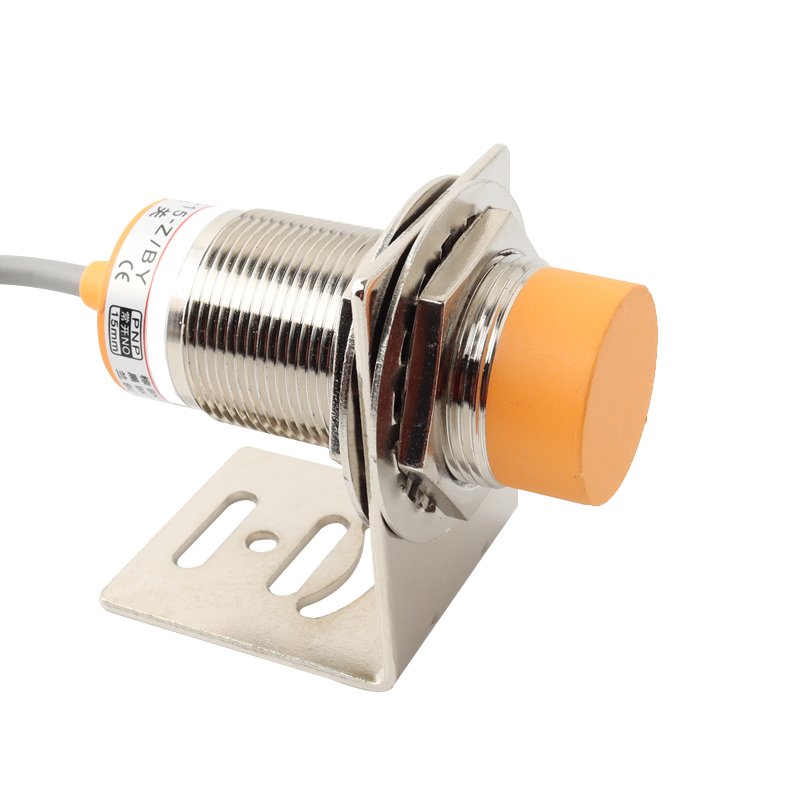
In the proximity switch, there is a component that has the ability to “perceive” the object approaching it, that is, the displacement sensor. It can use the sensitivity of the displacement sensor to the approaching object to achieve the purpose of controlling the switch on or off. The object moves from the switch to the […]
We use cookies to enhance your browsing experience, serve personalised ads or content, and analyse our traffic. By clicking "Accept All", you consent to our use of cookies.