Latching Push Button Switch: How It Works and Momentary vs Latching Differences
Published: Author: Wenzhou Sunto
A Latching Push Button Switch is designed to maintain its switching state after being pressed. Unlike a momentary push button, which returns to its original position as soon as the operator releases it, a latching switch remains active until it is operated again or manually released.
This makes latching push buttons useful in industrial control panels, machinery, electrical equipment, and other applications where a maintained ON/OFF command is required.
However, choosing between a momentary and latching switch depends on more than the way the button feels. Engineers also need to consider contact configuration, mounting size, electrical rating, environmental conditions, and the type of control circuit.
This guide explains how a Latching Push Button Switch works, how it differs from a momentary switch, and how to select the right type for industrial applications.
What Is a Latching Push Button Switch?
A Latching Push Button Switch, also called a maintained push button switch, changes state when pressed and remains in that state after the operator removes their finger.
A second press, twist, or release action returns the switch to its original state, depending on the mechanism.
Typical applications include:
Equipment ON/OFF control
Lighting control
Machine mode selection
Auxiliary circuits
Control panels
Industrial electrical equipment
The key feature is the maintained switching action.
For example:
Press once → circuit changes state → release finger → state remains unchanged
Then:
Press again → switch returns to original state
This operating method makes a latching switch suitable when the control signal must remain active without continuous operator pressure.
How Does a Latching Push Button Switch Work?
Inside the switch is a mechanical locking mechanism connected to the electrical contacts.
When the actuator is pressed:
The button moves inward.
The internal contacts change state.
A mechanical latch holds the actuator in position.
The electrical state remains unchanged after release.
A second operation releases the mechanism.
This differs from a spring-return push button, which immediately returns to its normal position.
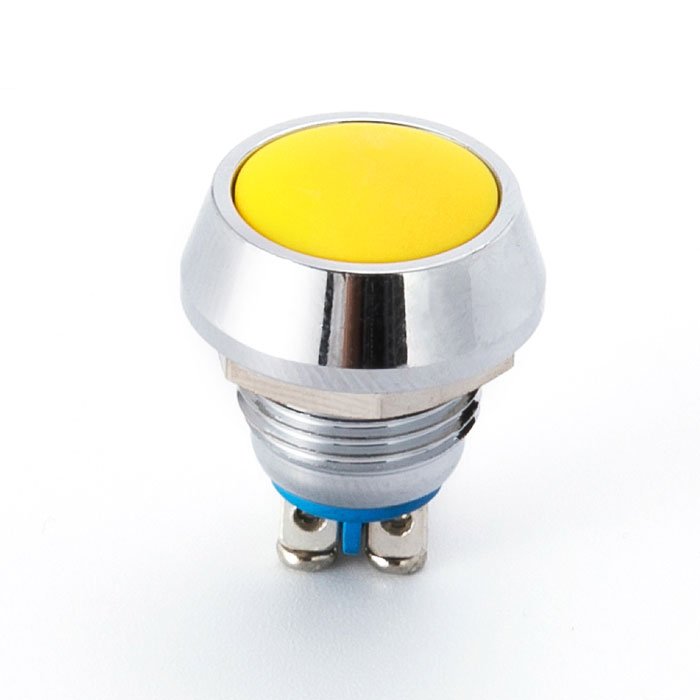
Wuce’s Yellow Metal Round Button Switch is an example of a maintained-action push button. Its operating method allows the switch to remain in the active state after pressing and return when operated again.
This makes it suitable for applications where a stable ON/OFF command is required.
Latching vs Momentary Push Button Switch
The difference between latching and momentary operation is one of the most important points in push button selection.
If the circuit requires a maintained state, a momentary switch may not provide the desired operation.
Ignoring Contact Configuration
The wrong NO or NC contact can cause the circuit to behave incorrectly.
Selecting by Size Only
Two switches with the same mounting diameter may have different:
Contact blocks
Body lengths
Ratings
Operating mechanisms
Ignoring Environmental Conditions
A standard switch may not be suitable for humid or dusty industrial environments.
Latching Push Button Switch Selection Checklist
Parameter
What to Check
Operation
Latching / Maintained
Function
ON/OFF / Mode control
Contacts
NO / NC / NO+NC
Voltage
Match control circuit
Current
Match switching load
Mounting Size
12 / 16 / 19 / 22 mm
Housing
Metal / Plastic
Indicator
LED / Non-illuminated
Protection
Required IP rating
Environment
Indoor / Outdoor / Dust / Moisture
FAQ
What is a Latching Push Button Switch?
A Latching Push Button Switch changes state when pressed and remains in that state after release until it is operated again.
What is the difference between latching and momentary push buttons?
A latching switch maintains its state, while a momentary switch returns automatically after release.
What is a maintained push button switch?
A maintained push button switch is another name for a latching push button. The switch stays in its changed position until manually reset.
Where are latching push buttons used?
They are commonly used in industrial control panels, machinery, lighting circuits, and ON/OFF control systems.
Can a latching push button control a motor directly?
In many industrial applications, the switch controls a relay, contactor, or PLC input rather than directly switching a high-power motor.
Conclusion
A Latching Push Button Switch is a practical solution for applications that require a maintained ON/OFF or mode-control signal.
Compared with a momentary push button, it remains in its switched state after release and only changes back when operated again.
When selecting a latching switch, engineers should check the operating method, NO/NC contact configuration, mounting size, electrical rating, housing material, and environmental conditions.
For industrial machinery and control panels, Wuce’s Yellow Metal Round Button Switch provides a suitable maintained-action option, while additional Push Button Switch configurations are available for different control requirements.
An Emergency Stop Push Button is a critical control component used on industrial machinery, automation systems, production lines, and control panels. Its purpose is simple: allow an operator to quickly initiate a stop command when an abnormal or potentially dangerous condition occurs. Although most emergency stop buttons use a familiar mushroom head, not all models […]
A Push Button Switch is one of the most common control components used in industrial machinery, electrical panels, automation systems, and control equipment. Although the device appears simple, choosing the right push button requires more than selecting a color or mounting size. Engineers need to consider the operating method, contact configuration, rated voltage and current, […]
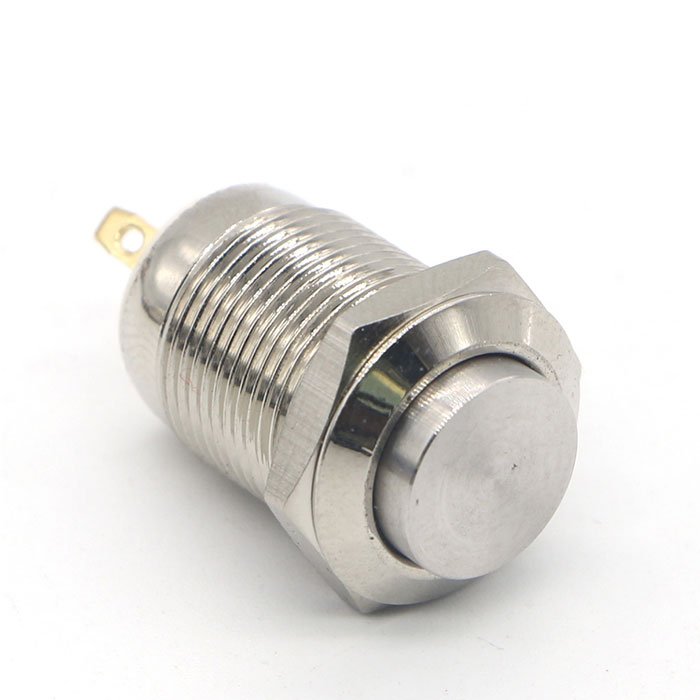
(1) According to different use occasions and specific purposes: Select the type of metal push button switches according to the use occasion, such as open type, protective type, waterproof type, anti-corrosion type, etc.; select the appropriate form according to the use, such as handle rotating type, key type, etc. type, emergency type, lighted type, etc. For example, […]